
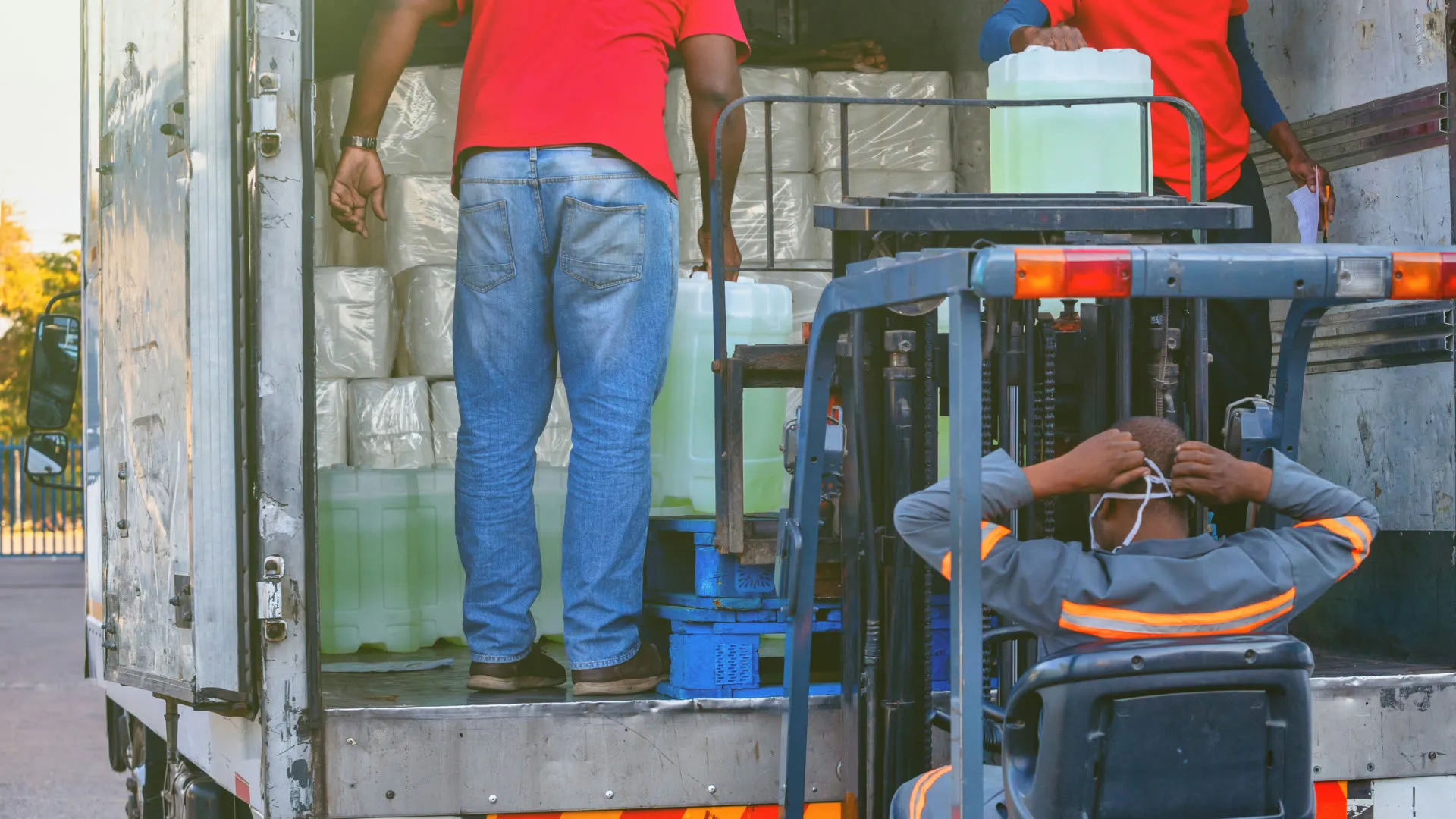
Specialized Services
Container Transloading
Freight transferred from one container to another: unloaded, checked, and reloaded at our Atlanta facility, so every leg rides on the right equipment.
What is container transloading?
Container transloading is the transfer of goods from one container to another. Cargo often arrives at a port or terminal in one kind of container, such as an ocean shipping container, but needs to travel on in another, such as a truck trailer or a rail car. Transloading bridges the two in four steps:
-
Unload the inbound container
The cargo comes out of the ocean container or rail car at the transload facility, by forklift, pallet jack, or by hand for floor-loaded freight.
-
Inspect the cargo
Every shipment is checked for damage or other issues before it goes any further, so a problem is caught at the dock instead of at the customer’s door.
-
Sort and prepare the freight
Cargo is sorted by destination, and palletized or consolidated where needed, so each outbound load carries exactly what it should.
-
Reload for the next leg
The freight is loaded into the domestic trailer or rail car that will carry it on, and sent to its final destination.
Done well, transloading is fast and safe, but it takes specialized equipment and skilled workers. For businesses that rely on international trade or move goods over long distances, it lets cargo travel more flexibly and efficiently, saving time and money while it reaches its destination safely and on time.
Container transloading: key advantages
Flexible across modes
Transloading shifts freight seamlessly from an ocean container to a truck trailer or rail car, so each leg uses the most practical equipment for its route and destination.
Lower transportation costs
Matching every segment to the most economical mode and container size trims empty miles, cuts handling fees, and captures bulk-rate savings.
Streamlined supply chains
Fewer hand-offs, optimized routes, and right-sized equipment reduce delays and damage risk, so goods reach your customers on schedule and in top condition.
The bottom line: transloading keeps logistics agile, efficient, and cost-effective. It is an essential link for any business that needs dependable, competitively priced delivery.
Transloading at RS Group
- Containers processed
- 1,400+
- Every year
- Atlanta facility
- 80,000 sq ft
- Where we unload, inspect, and reload
- Carrier partners
- 6,200+
- For the outbound leg, by truck or rail
Container transloading with RS Group
If you have containers of goods that need to move into different equipment, we streamline the process and make it more efficient. Working with RS Group gives you:
- Unloading, inspection, and reloading at our 80,000 square foot Atlanta facility.
- Outbound capacity from our network of transportation providers, by truck or rail, at the most cost-effective and reliable rate we can find.
- Drayage to bring the container from the port or rail ramp, and to return it empty.
- Experienced professionals who guide you through every step and handle the complexities of the process.
- Short- or long-term storage for cargo that is not ready to ship on.
Beyond transloading, we offer a wide range of freight services: full truckload and LTL, cross-docking, warehousing, and air freight as an Indirect Air Carrier (IAC). Together they make a complete, end-to-end logistics solution that fits your needs and your budget.
Why move cargo into domestic trailers?
Ocean containers are built for ships. Once the cargo is on land, there are good reasons to move it into domestic equipment instead of trucking the container all the way to its destination:
- More room per truck: a 53-foot domestic trailer holds more than a 40-foot ocean container, so the same cargo often needs fewer trucks for the long leg inland.
- Faster container returns: the ocean container goes back to the port or rail ramp sooner, which helps avoid detention charges for keeping it too long.
- One container, many destinations: cargo bound for several customers can be split onto separate outbound loads at the dock.
- Equipment that fits the freight: each leg can use the right equipment, from a dry van to a flatbed, instead of the box the cargo happened to arrive in.
Transload, or keep the container intact?
Not every container needs to be transloaded. Here is how a transload compares with trucking the ocean container all the way to its destination.
| Factor | Transload At our Atlanta facility | Container intact Drayage to destination |
|---|---|---|
| How it moves | Cargo moves into a domestic trailer or rail car for the next leg | The ocean container rides on a chassis all the way to its destination |
| Inspection | Cargo checked for damage at the dock | Not opened until it is delivered |
| Destinations | Split across several outbound loads | One destination per container |
| Container return | Released back to the port or rail ramp early | Out until it is emptied and returned |
| Best for | Long inland legs, multi-destination imports, freight that needs checking | Short moves to a single nearby dock |
Transload At our Atlanta facility
- How it moves
- Cargo moves into a domestic trailer or rail car for the next leg
- Inspection
- Cargo checked for damage at the dock
- Destinations
- Split across several outbound loads
- Container return
- Released back to the port or rail ramp early
- Best for
- Long inland legs, multi-destination imports, freight that needs checking
Container intact Drayage to destination
- How it moves
- The ocean container rides on a chassis all the way to its destination
- Inspection
- Not opened until it is delivered
- Destinations
- One destination per container
- Container return
- Out until it is emptied and returned
- Best for
- Short moves to a single nearby dock
For one container going to one nearby dock, plain drayage is often simplest. Send us the details and we will recommend one.
Transloading FAQ
What is container transloading?
Container transloading is the process of transferring goods from one container to another: unloading them from the inbound container, checking them, and reloading them into another container or trailer for the next leg of the trip.
Who can benefit from container transloading?
Any business that imports or exports goods. It is especially useful for companies shipping smaller quantities, because it lets them consolidate shipments into larger loads, and for importers whose cargo needs to reach several destinations.
Why is container transloading important?
It makes transportation more efficient. Consolidating smaller shipments into larger containers lowers transportation costs, and transloading also lets goods that need different handling or storage conditions be separated onto the right equipment.
What types of goods can be transloaded?
Almost any type of goods can be transloaded, including dry goods, refrigerated goods, hazardous materials, and oversized cargo. Our Atlanta warehouse does not handle hazardous materials or perishables, so tell us what the container holds and we will plan the right way to move it.
Where does the transloading happen?
At our 80,000 square foot warehouse on Atlanta’s south side, minutes from the airport and major interstates. Containers come to us from the port or the rail ramp by drayage, and the cargo leaves by truck or rail.
Can you transload freight from rail cars?
Yes. Our Atlanta facility transfers freight from railcars to trucks as well as from ocean containers, so cargo that arrives by rail can continue by road.
How is transloading different from cross-docking?
Transloading moves freight between transportation modes, such as from an ocean container or rail car into a truck trailer, and may involve brief storage. Cross-docking moves pre-sorted freight from inbound to outbound trucks with little or no storage.
Get Moving
Ready to move your freight?
Tell us the origin, destination, and what you are shipping. We will quote it and get it on a truck.